
Why Is My Water Bill Suddenly High? 7 Hidden Causes
A water bill that jumps by a third or doubles from one cycle to the next rarely happens because your household quietly started using more water on purpose. When the number spikes and nothing about your routine has changed, it means water is being used or lost somewhere you don't see. The volume is real, the meter recorded every gallon, and the trick is finding where it went before the next billing cycle lands the same way.
The good news is that the most common culprits are ordinary and fixable, and you can confirm a few of them yourself in about fifteen minutes with no tools. This walks through what actually drives a sudden increase, ordered roughly from most likely to least, then shows you how to diagnose the source and decide what you can handle versus what needs a plumber's equipment.
Quick Answer: A sudden high water bill usually means a hidden leak, and the fastest check is the meter test: turn off every water fixture in and around the house, then watch the meter's low-flow indicator. If it keeps moving with everything off, water is escaping somewhere. A silently running toilet is the single most common cause.
The Causes, From Most Likely To Least
Water loss inside a home follows a fairly predictable ranking. Knowing the order saves you from tearing into a wall when the answer is sitting in a toilet tank.
A running toilet: A silently running toilet is the leading hidden waste in most homes, and it earns that spot because it makes almost no sound. The rubber flapper at the bottom of the tank seals the tank water off from the bowl. Over a few years, the flapper hardens, warps, or collects mineral scale on its seat, and it stops sealing completely. Tank water then trickles past it into the bowl around the clock. Because the fill valve keeps topping the tank back up, the toilet passes a steady stream to the drain without ever making the gurgle or hiss you would notice. A single flapper leak can move a startling volume over a full billing period, which is why toilets are the first thing to rule out.
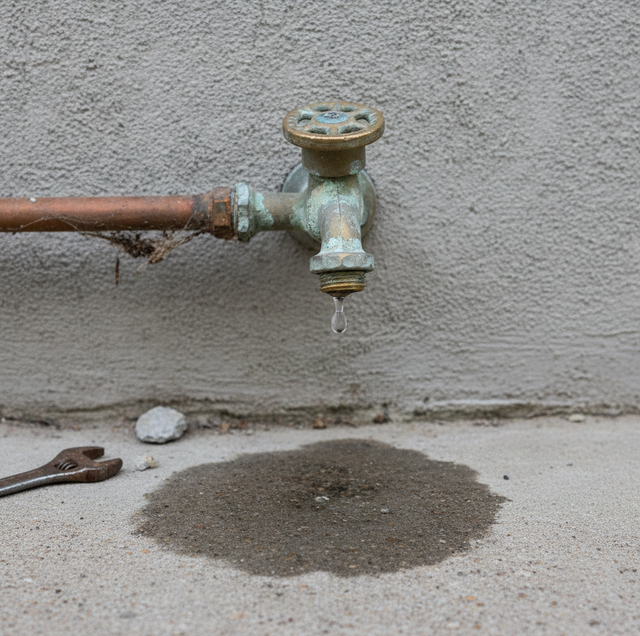
A dripping faucet or fixture- A drip looks trivial, one drop at a time, and that is exactly why it fools people. A worn faucet cartridge, a failing O-ring, or a hose bib that won't quite close leaks continuously between every use, day and night. The drops are small, but the clock is relentless, and a faucet or fixture that weeps steadily adds up to gallons over a month. Outdoor hose bibs are a common offender because a barely-closed spigot gets ignored for weeks.
An irrigation or sprinkler leak- Outdoor irrigation is often the biggest single water user on a property, so a fault out there scales fast. A sprinkler valve that sticks partway open, a diaphragm that has failed inside a valve, a cracked lateral line, or a chewed or split drip tube can all bleed water into the soil every time the system pressurizes, or continuously if a valve won't shut. Because the loss happens underground or out at the edge of the yard, nothing looks wrong from the house while the meter keeps counting.
A leaking water heater or its T&P valve- A water heater tank that has begun to corrode can weep from a seam or fitting, and the temperature-and-pressure relief valve on the side can seep if it's failing or if system pressure runs high. Sometimes this shows as moisture around the base of the tank or a trickle from the relief valve's discharge pipe. It is worth a look because the same failure that wastes water can signal a tank near the end of its life.
A slab or underground supply-line leak- This is the one people fear, and it is lower on the list because it's less common than a bad flapper, not because it's minor. A pressurized supply line running under the slab or buried in the yard can develop a pinhole or crack. Water then drains straight into the ground or under the foundation, so the meter runs and the bill climbs while no puddle ever appears indoors. The clues are indirect: an unexplained warm spot on the floor when the leak is on the hot side, a faint sound of running water in a wall or on the floor with everything off, or a patch of lawn that stays wet or is greener than the rest. A hidden line leak is the classic case of water lost, not water used.
A seasonal or household usage change- Not every spike is a leak. More people in the house, a stretch of guests, a new appliance, filling a pool, or simply running irrigation more often all raise legitimate use. This belongs on the list precisely so you can rule it in or out honestly before you assume the worst. If the household really did use more this cycle, the meter test below will come back clean.
A water softener stuck cycling- A water softener periodically regenerates, rinsing its resin bed and flushing that water to the drain. When the control valve jams mid-cycle or the unit is set to regenerate far more often than necessary, it can quietly run water to the drain over and over. Because that discharge goes down a drain line rather than out of a faucet, the waste is easy to miss while it still registers on the meter.
How To Diagnose The Source
The single most useful test is the one your water utility already installed for you: the meter. It counts every gallon that passes into your property, so it settles the question of whether water is moving when it shouldn't be.
Start by shutting off every water-using fixture and appliance: taps, the dishwasher, the washing machine, the ice maker, irrigation, everything. Then find your water meter, usually in a box near the street or curb, and watch the low-flow indicator. Most meters have a small triangle, a star-shaped dial, or a fine-sweep hand designed to spin even with a trickle of flow. With all water off, that indicator should sit perfectly still. If it creeps or spins, water is escaping somewhere on your side of the meter, and you have confirmed a leak before wasting time guessing.
Once the meter tells you water is moving, you isolate the indoor from the outdoor. Shut the main shut-off valve where the supply enters the house and recheck the meter. If the indicator stops, the leak is inside the house or in the line between the meter and that valve on the house side. If it keeps moving with the house isolated, the loss is on the outdoor or irrigation branch that sits before the house valve, which points you straight at the sprinkler system or a buried yard line.
For toilets specifically, run the dye test. Drop a few drops of food coloring or a dye tablet into the tank, don't flush, and wait ten to fifteen minutes. If color shows up in the bowl, the flapper is passing water, and that toilet is leaking. Run it on every toilet in the house, since a slow one can hide behind a fine leak in the meter reading.
The meter works like a witness that never blinks: it cannot tell you which room, but it can tell you with certainty that water left the system, and the isolation steps narrow the room down for you.
DIY Versus When To Call A Plumber
Plenty of this is squarely homeowner territory. Checking toilets with the dye test, spotting and swapping a worn flapper, finding a dripping faucet or a hose bib that won't close, and running the meter test all take basic attention and no special equipment. Many high bills are solved right there, at a toilet or a fixture, without anyone coming out.
The line to call a professional falls where the leak is hidden and pressurized. A slab leak, a buried supply-line leak, or a break inside a wall doesn't announce itself, and finding it without cutting into everything requires acoustic listening gear, pressure testing, and sometimes electronic line tracing. A plumber can pinpoint the spot, confirm it's the supply side rather than a drain issue, and repair it with the least demolition. The same is true for a water heater that's weeping from the tank or a softener valve that's stuck, where the fix involves diagnosing the specific component rather than blindly replacing the whole unit.
The distinction that matters most for a homeowner is this. A fixture leak is visible or audible: you can see the drip, hear the toilet, or find the wet spigot. Higher legitimate use shows up as a clean meter test, no indicator movement with everything off, and a household that honestly did more this cycle. A hidden supply or slab leak is when the meter moves with everything shut off, yet nothing is visibly wet indoors. That third category is the one worth a professional's tools, because it can quietly damage a foundation while it runs.
Frequently Asked Questions
If the low-flow dial is too fine to read, use the timed-read method instead: write down the exact meter reading, then use no water anywhere for a full hour, and read it again. Any difference is your leak rate for that hour. The one catch is to make sure nothing cycles on its own during the test, so shut off the automatic icemaker and put the water softener in bypass first, since either can quietly draw water and make a leak look bigger than it is.
A silently running toilet. What makes it the top suspect is the sheer volume: a single flapper that no longer seals can waste up to a couple of hundred gallons a day, running past the seat and down the drain without a sound. That is easily enough to move a monthly bill on its own, which is why one bad flapper, an inexpensive part, can be the entire explanation for a spike.
Isolate at the house shutoff, which is usually right where the supply enters the building or, if you can't find it there, at the cold inlet on top of the water heater where the whole-house line ties in. Closing that valve cuts off everything indoors while leaving the irrigation branch on the street side still live. Recheck the meter: if it stops, the leak is inside; if it keeps ticking, the loss is out on the sprinkler or yard line ahead of that valve.
Yes, and a slab leak is the classic case. On a hot side line, it often gives itself away as a warm spot underfoot paired with a faint hiss when the house is silent. Rather than jackhammering the floor to chase it, a plumber runs acoustic listening gear across the slab first, moving the sensor until the sound of escaping water peaks, so the concrete only gets opened at the one spot directly over the break.
It can. When the control valve sticks and the unit regenerates repeatedly, each cycle dumps softened water and a slug of salt brine straight down the drain, so you are paying for water and burning through the salt in the brine tank at the same time. The fix is usually setting the regeneration schedule correctly for your actual water use, or replacing a valve that no longer completes its cycle, which stops the repeat flushing.
More than most people expect. At a rate of about one drip per second, a leak adds up to roughly five gallons a day, which quietly stacks into a noticeable bill over a month. The most overlooked culprit is an outdoor hose bib left barely weeping, since nobody walks past it the way they do a kitchen tap, and it can drip unnoticed for weeks.
Book a leak check with a licensed plumber — stop paying for water you never used. MNS Plumbing & Drain Cleaning serves Anthem and the Valley. ROC 262137. Call (602) 362-4524.
