
What Water Hammer Is Telling You Before Pipes Fail
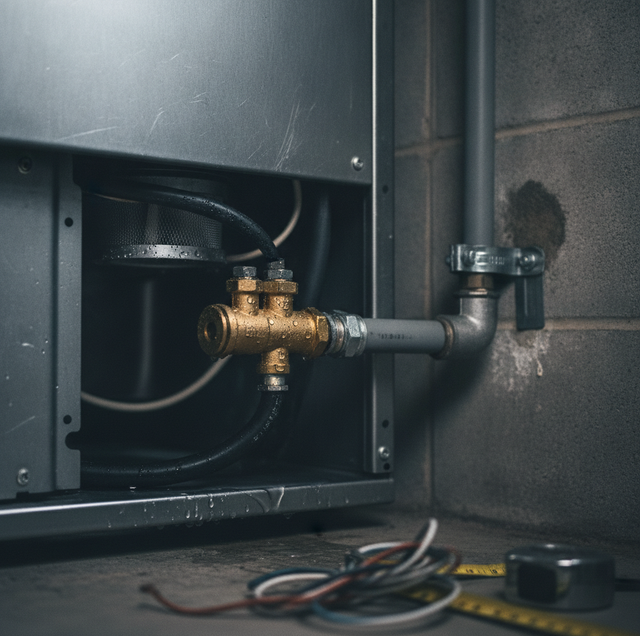
Shut off the kitchen faucet fast, and the whole wall answers back with a thud. The washing machine finishes filling, and something inside the pipes cracks like a hammer against a stud. That sound has a name, and it is not random. It is water hammer, and every bang is your plumbing reporting a condition that will keep working on your joints and valves until you address the cause.
The noise is dramatic, but the physics behind it is simple. Understanding what triggers it tells you exactly what needs to change, and whether you can quiet it yourself or should hand it to a plumber.
What The Banging Actually Is
Water moving through a supply line carries momentum, just as a car rolling downhill does. When a valve closes gradually, that momentum bleeds off in a controlled way. When a valve slams shut in a fraction of a second, the moving column of water has nowhere to go. It piles into the closed valve and the surrounding pipe all at once, and that sudden stop sends a pressure wave hammering back up the line. The bang you hear is that shock wave rattling the pipe against framing, straps, and fittings.
Two things make it loud. First, water does not compress, so the energy has to go somewhere, physically rather than be absorbed. Second, the faster the valve shuts and the faster the water is already moving, the harder the hit. That is why the loudest hammer usually shows up not at a hand-turned faucet but at an appliance, where an electric valve snaps closed in an instant.
The Conditions That Set It Off
Water hammer rarely has a single cause. It is usually a stack of conditions, and quieting the pipes means finding which ones apply to your home.
High water pressure is the most common driver. The more pressure behind the water, the more force in the column, and the harder it slams when the flow stops. Homes fed by a strong municipal supply often run higher than the plumbing was designed to handle, which loads every shutoff with extra punch.
Fast-closing appliance valves turn ordinary flow into a hammer. A washing machine, dishwasher, or ice maker fills through a solenoid valve, an electrically operated valve that opens and closes on command. When the appliance has taken enough water, that solenoid snaps shut in an instant. There is no gradual taper, the way there is when you ease a faucet handle closed, so the momentum stops cold and the bang follows.
Missing or waterlogged air chambers remove the system's built-in cushion. Older homes were often plumbed with air chambers, short capped stubs of vertical pipe near fixtures that trap a pocket of air. That air compresses when a pressure wave hits, softening the blow. Over the years, the trapped air dissolves into the water, and the chamber fills solid, leaving nothing to absorb the shock.
Loose or unsecured pipes turn a small shock into a loud one. A pipe that is properly strapped to the framing barely moves. A run that has slipped its straps or was never anchored well can jump and slap against a joist every time the pressure wave passes, adding a rattling bang on top of the shock itself.
Why You Should Not Just Live With It
It is tempting to treat the noise as a quirk of an old house. The problem is that the shock wave does not stop at the sound. Every hammer stresses the system a little. Threaded and soldered joints take repeated jolts they were never meant to absorb, and over time, they can loosen and start to weep. The valves inside faucets and appliances wear faster under repeated impact. Supply lines and connectors get flexed again and again.
None of this fails on the first bang. It is the accumulation that does the damage, which is exactly why a seemingly harmless noise is worth chasing down. In a slab-on-grade home, a supply line that starts weeping inside or beneath the slab is a far more expensive fix than the arrestor or valve that would have prevented the stress.
How The Noise Gets Quieted
The right fix follows the cause, so a real repair starts with figuring out which conditions are in play.
Water-hammer arrestors are the modern cushion. An arrestor is a sealed device with a spring or gas-charged chamber behind a piston, and it absorbs the pressure wave in a package that will not waterlog the way an open-air chamber does. Placed close to the fixture or appliance causing the noise, it soaks up the shock right where it starts.
A pressure-reducing valve attacks the noise at its root when high pressure is the driver. A PRV is installed on the main line where water enters the house, reducing the incoming pressure to a level the plumbing is built for. Lower the pressure, and you lower the force in every shutoff at once, so a single valve can quiet fixtures all over the house.
Recharging air chambers brings back the cushion in homes that still have them. The chambers regain their air pocket by draining the system, allowing air to refill the stubs before water returns.
Securing loose pipe ends the rattling half of the problem. Adding or tightening pipe straps and cushioning where a line passes through framing stops the pipe from slapping when the wave travels through it.
Sorting Out The Clues
The useful thing about water hammer is that it points to its own cause. A bang associated with a specific appliance points to a fast-closing solenoid valve and a missing arrestor on that machine. Noise all over the house when any fixture shuts points more toward system pressure and a PRV. A rattle you can trace to one stretch of wall points to a pipe that has come loose from its strapping.
Reading those clues is what turns a loud, annoying house into a diagnosis. Some of it you can check yourself, and some of it, especially anything involving main-line pressure or a valve on the incoming service, is worth a professional who can measure the pressure, confirm the cause, and match the fix to it rather than guessing.
Frequently Asked Questions
Timing and character separate them. Water hammer is a single sharp bang the instant a valve shuts, gone as fast as it arrived. A steady hum or vibration while water is actually running usually means flow noise or a valve that is partly closed and whistling, not hammer. A ticking or light knocking that comes on slowly after you run hot water is typically thermal expansion, the pipe creeping against framing as it warms, not a shock wave. Matching the sound to the moment tells you which problem you have.
Because they close their valves electrically and almost instantly. A faucet closes as fast as your hand can turn it, giving the water a moment to slow. An appliance solenoid gets an electrical signal and snaps shut in a fraction of a second, so the water column stops with no taper at all. That is why a dedicated arrestor screwed onto the hot and cold hookups behind the appliance often silences a machine that no whole-house fix fully quieted.
Often, yes, and it is worth measuring before you buy anything. A hose-bib pressure gauge threads onto an outside spigot or laundry faucet and reads the static pressure in seconds. Residential systems are generally designed for pressure in the range plumbing codes target, and a reading well above that both worsens hammer and shortens the life of every valve and connector in the house. When the gauge reads high, a pressure-reducing valve on the main is the fix that addresses both the noise and the wear.
They are short, capped, dead-end sections of pipe, usually vertical, installed near fixtures to trap a pocket of air as a shock absorber. The trouble is that air slowly dissolves into water under pressure, so over months and years the pocket disappears, and the chamber fills solid, or waterlogs. Once it is full of water, it can no longer compress, and the cushion is gone. You recharge them by shutting off the main and opening the highest and lowest faucets in the house so the lines drain fully, which lets air back into the stubs before you turn the water on again.
A properly sized and placed arrestor usually silences the bang for good, but it is not always forever. Unlike the old open-air chambers, you can recharge by draining the pipes. A modern arrestor is a sealed cartridge with a piston and a captive air charge. Over many years, that charge can weaken, so the cushion fades. Placement matters as much as the part: an arrestor works best mounted close to the valve or appliance causing the slam, so a bang that returns after one is fitted often means it is undersized, set too far from the source, or that high house pressure is the real driver and a pressure-reducing valve is the better answer.
You can reasonably drain the system to recharge air chambers, add a screw-on arrestor at a noisy appliance, and tighten or add pipe straps you can reach. Where it makes sense to bring in a plumber is for anything on the incoming service, installing or replacing a pressure-reducing valve, cutting an arrestor into a fixed line, or when you have tried the simple fixes and the hammer persists. At that point, a pro can put a gauge on the system, confirm whether pressure or a specific fixture is the culprit, and correct it once rather than chasing it piece by piece.
Hearing a bang every time a faucet or appliance shuts off? Have your water pressure checked and the right hammer fix installed before it wears on your joints. MNS Plumbing & Drain Cleaning serves Anthem and the Valley. ROC 262137. Call (602) 362-4524.
