
Recirculating Pump vs Tankless: What Fixes the Wait?
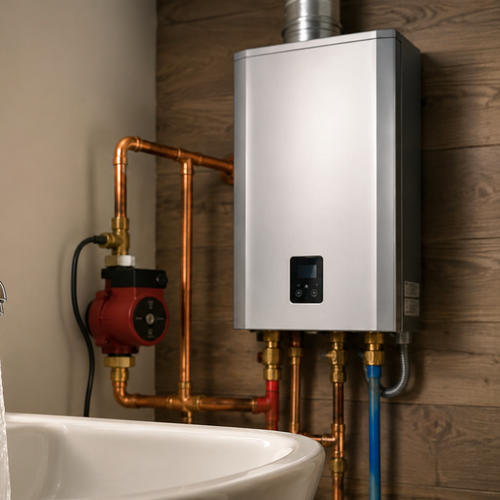
Quick Answer: A long wait for hot water at the tap is a delivery problem, not usually a heating problem — the hot water has to travel from the heater through the pipes, and the cool water sitting in those pipes runs out first. A recirculating pump directly fixes that wait by keeping hot water moving through the pipes so it's ready almost instantly at the fixture. A tankless heater fixes a different problem: it provides endless hot water on demand, but on its own it doesn't shorten the travel time, so you can still wait for hot water to arrive. To solve the wait specifically, a recirculation system is the targeted answer; a tankless unit addresses supply, and the two are sometimes combined.
If you've ever stood at the sink running the tap, waiting for it to finally turn warm, you know the particular annoyance of slow hot water. When people look for a fix, two solutions come up — a recirculating pump and a tankless water heater — but they solve different problems. Understanding which one actually targets the wait saves you from buying the wrong solution.
Why You Wait for Hot Water in the First Place
The wait isn't because your heater is slow to make hot water. It's because of the distance. Hot water is made at the heater, but it has to travel through the pipes to reach the faucet. Between uses, the water sitting in those pipes cools down. When you open the tap, that cooled water has to flow out first before the hot water arrives. The farther the fixture is from the heater, the more cooled water is in the line, and the longer you wait.
That's the key insight: the wait is a delivery-and-distance issue. So the real question is which solution addresses delivery.
What a Recirculating Pump Does
A recirculating pump is designed specifically to eliminate that wait. It keeps hot water circulating through the pipes — either continuously, on a timer, or on demand when you need it — so that hot or warm water is already at or near the fixture when you turn it on. Instead of flushing out a pipe full of cooled water, you get hot water almost immediately.
Because it directly tackles the distance problem, a recirculation system is the targeted fix for slow hot water. It can be set up to run during the hours you actually use hot water, or activated by a button or sensor, to balance convenience against energy use.
What a Tankless Heater Does
A tankless water heater solves a different problem. It heats water on demand as it flows through the unit, so it never runs out of hot water — endless showers, no waiting for a tank to recover. That's its strength.
But here's the catch people miss: on its own, a tankless heater doesn't shorten the travel time from the heater to the faucet. The hot water it makes still has to push the cooled water out of the pipes first. In fact, some tankless units take a moment to fire up and reach full temperature, so the wait at a distant fixture can be similar to or even a touch longer than with a tank. A tankless heater fixes the supply, not the wait.
| Your goal | Recirculating Pump | Tankless Heater |
|---|---|---|
| Faster hot water at the tap | Yes — its main purpose | No — doesn't shorten travel |
| Never running out of hot water | No — doesn't add capacity | Yes — endless on demand |
| Saving water wasted while waiting | Yes | No |
| Saving space | No | Yes |
| Targets the "wait" problem | Directly | Not on its own |
Matching the Solution to the Problem
This is where people go wrong. If your complaint is purely the wait — the hot water gets hot, you just have to run the tap too long to get it — a recirculating pump is the direct fix, and you may not need a new heater at all. If your complaint is running out of hot water during long or back-to-back use, a tankless heater addresses that, but it won't make the hot water arrive faster. And if you have both problems, the two can be combined: a tankless heater for endless supply paired with a recirculation system for fast delivery. Many tankless setups add a recirculation feature precisely because the heater alone doesn't solve the wait.
Time your wait before deciding. If hot water eventually arrives just fine but takes too long to show up, that's a delivery problem a recirculating pump solves. If the water never stays hot long enough, that's a supply problem pointing toward tankless. Diagnosing which annoyance you actually have prevents an expensive mismatch.
Why the Right Diagnosis Saves Money
Buying a tankless heater to fix a slow-hot-water complaint is a common and costly mismatch, because you can spend on a new heater and still be standing at the tap waiting. Conversely, a recirculation system won't help if your real issue is running out of hot water. Getting the diagnosis right — is it a wait problem or a supply problem? — ensures you spend on the solution that actually addresses your daily frustration. A plumber can assess your layout, the distance from the heater to fixtures, and your usage to recommend the right approach, whether that's a recirculation system, a tankless unit, or both working together.
Frequently Asked Questions
Not by itself. A tankless heater provides endless hot water on demand, but it doesn't shorten the time it takes for hot water to travel from the heater to the faucet. The cooled water in the pipes still has to flush out first. For instant hot water at the tap, you need a recirculation system, which some tankless setups include.
A recirculating pump, because it directly addresses the cause — the distance and the cooled water sitting in the pipes. By keeping hot water circulating so it's ready at the fixture, it nearly eliminates the wait. The wait is a delivery problem, and recirculation is the solution designed for it, whereas a new heater addresses how the water is made, not delivered.
Because of the distance from the water heater. Hot water has to travel through the pipes, and the water sitting in those pipes cools between uses. The farther a fixture is from the heater, the more cooled water has to flush out before hot water arrives, so distant faucets have the longest waits. A recirculation system addresses this.
Yes, and it's a common pairing. A tankless heater provides endless hot water, while a recirculation system delivers it quickly to the tap — together solving both supply and wait. Many tankless installations add a recirculation feature for exactly this reason, since the heater alone doesn't shorten the delivery time.
It can use some energy to keep water moving, but modern systems manage this well. They can run on a timer during the hours you actually use hot water, or activate on demand with a button or sensor, rather than running constantly. These options balance the convenience of fast hot water against energy use, keeping waste low.
Identify your actual complaint. If hot water arrives but takes too long, that's a wait problem solved by recirculation. If hot water runs out during use, that's a supply problem that a tankless unit can address. If both, a combined setup fits. A plumber can evaluate your pipe layout, distances, and usage to recommend the right fix for your situation.
Fix the Problem You Actually Have
A long wait for hot water is a delivery problem, and a recirculating pump is the solution built to fix it. A tankless heater solves a different problem — endless supply — without shortening the wait, so buying one to cure slow hot water is a costly mismatch. Pin down whether your frustration is the wait or running out, and you'll choose the solution that actually ends it, sometimes by combining both.
Tired of waiting for hot water at the tap — Get your layout assessed and the right fix recommended, from a recirculation system to a tankless setup. MNS Plumbing & Drain Cleaning serves Anthem and the Valley. ROC 262137. Call (602) 362-4524.
