
Hydro Jetting vs Snaking: Which Clears Your Clog for Good?
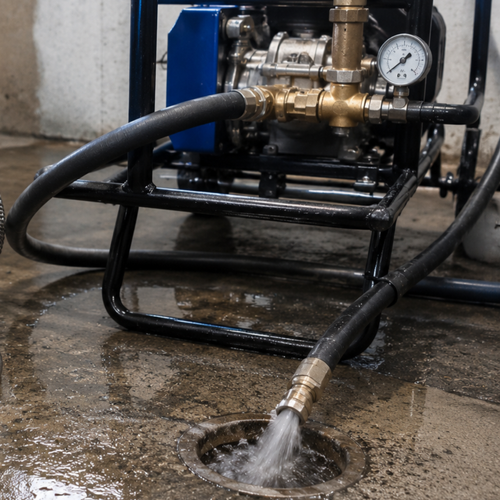
Quick Answer: Snaking (cabling) sends a flexible metal cable down the drain to break through or hook out a clog — fast, affordable, and ideal for a single localized blockage. Hydro jetting uses high-pressure water to scour the entire inside of the pipe, removing grease, scale, and root intrusion and restoring the pipe to near-full diameter — better for severe, recurring, or whole-line buildup. Snaking clears the hole; jetting cleans the pipe. The right one depends on what's clogging it and how often it comes back.
Both methods clear a drain, but they solve different problems, and using the wrong one wastes money or just delays the next backup. Snaking is the quick, targeted fix; hydro jetting is the deep clean. Knowing what your situation calls for comes down to what's actually in the pipe and whether you've been here before with the same drain.
How Snaking Works
A drain snake — also called a cable or auger — is a long, flexible metal cable fed down the drain by hand or machine. When it reaches the clog, the spinning head either breaks through the blockage or hooks it so it can be pulled back out. It's the classic, proven way to clear a drain, and for a lot of clogs, it's exactly the right tool.
Snaking shines on a single, localized clog — a wad of hair in a bathroom drain, an object lodged in a line, a blockage at one specific spot. It's fast, it's the more affordable option, and it gets water flowing again quickly. Its limitation is that it punches through the blockage rather than cleaning the entire pipe: it opens a channel, but grease, scale, and buildup coating the pipe walls largely remain in place. That's why a snaked drain can clog again before long if the real problem is built-up gunk along the line rather than one discrete obstruction.
How Hydro Jetting Works
Hydro jetting clears a line with water instead of a cable. A specialized hose with a directional nozzle is fed into the pipe, blasting water at high pressure in multiple directions — forward to cut through the clog and backward to scour the pipe walls as it's pulled through. Instead of just opening a hole, it strips the buildup off the entire inner surface and flushes it away, restoring the pipe close to its original diameter.
That makes jetting the heavy-duty option. It handles things a cable struggles with: thick grease accumulation, mineral scale, sludge, and even root intrusion in some lines. Because it cleans the whole pipe rather than poking through one spot, it addresses the cause of recurring backups, not just the symptom. The trade-off is that it's a bigger, more involved service than a quick snaking.
The Head-to-Head
| Factor | Snaking | Hydro Jetting |
|---|---|---|
| How it clears | Cable breaks or hooks the clog | High-pressure water scours the pipe |
| Result | Opens a channel through the clog | Cleans the full pipe diameter |
| Best for | One localized clog | Grease, scale, roots, recurring buildup |
| Recurring clogs | May return if walls are coated | Removes the buildup causing returns |
| Cost and scope | Lower, quicker | Higher, more thorough |
| Roots | Limited | Can cut and clear in many cases |
Which One Your Drain Needs
The deciding questions are simple: what's clogging it, and how often? A single slow or stopped drain that's never given you trouble before — a tub, a bathroom sink, one fixture — is usually a localized clog, and snaking is the right, economical first move. There's no reason to jet a one-off hairball.
But if the same drain keeps backing up no matter how many times it's cleared, that pattern points to buildup coating the pipe, and snaking will only keep buying short reprieves. That's when hydro jetting earns its cost, because it removes what's actually narrowing the pipe. Jetting is also the better answer for kitchen lines packed with years of grease, for older pipes with heavy scale, and for lines with root intrusion that a cable can't fully clear. Many plumbers will run a camera first to see what's in the line, which takes the guesswork out of the choice.
One caution: hydro jetting is powerful, and very old or already-damaged pipes need to be assessed before jetting so the pressure doesn't worsen an existing weakness. A good plumber checks the pipe's condition before reaching for the jetter, which is another reason a camera inspection is so useful.
It's also worth thinking about prevention once the line is clear. Keeping grease, coffee grounds, and food scraps out of kitchen drains, using strainers to catch hair and debris, and running plenty of hot water after heavy use all slow the buildup that leads to a clog. For a line that's already been jetted clean, those habits stretch the time before it needs clearing again — and for a line that keeps clogging despite them, that's a sign the problem may be the pipe itself rather than what's going down it, which a camera will confirm.
Frequently Asked Questions
Snaking sends a metal cable down the drain to break through or pull out a clog, opening a channel through the blockage. Hydro jetting uses high-pressure water to scour the entire inside of the pipe, removing grease, scale, and buildup and restoring the full pipe diameter. Snaking clears one spot quickly; jetting cleans the whole line more thoroughly.
Not always — it depends on the clog. For a single localized blockage, snaking is faster and more affordable and does the job. For severe, recurring, or whole-line buildup like grease, scale, or roots, hydro jetting is better because it removes the cause rather than just poking through it. The right method matches the problem, not a blanket "one is better."
Because snaking opens a hole through the clog, but leaves buildup coating the pipe walls. If the real issue is grease, scale, or sludge lining the pipe, the channel closes back up before long. Recurring clogs in the same drain are a classic sign that you need hydro jetting to clean the full pipe, not another quick snaking.
It can if the pipes are very old or already damaged, which is why a good plumber assesses the line's condition first, often with a camera inspection. On sound pipes, hydro jetting is safe and effective. The caution is specifically for fragile or deteriorated lines, where the high pressure could worsen an existing weakness — so the condition is checked before jetting.
Think about what's clogging and how often. A one-time clog in a single fixture usually just needs snaking. A drain that keeps backing up, a grease-packed kitchen line, a heavy scale, or root intrusion points to hydro jetting. A camera inspection settles it by showing what's actually in the pipe, so the method matches the real problem instead of guessing.
Match the Method to the Mess
Snaking and hydro jetting aren't rivals so much as different tools for different clogs. Snaking is the fast, affordable fix for a single localized blockage. Hydro jetting is the deep clean for grease, scale, roots, and the recurring backups that snaking can't keep up with. If a drain keeps clogging, that's the signal the pipe walls need cleaning, not just another hole punched through — and a quick camera look will tell you exactly which one your line needs.
Same drain clogging over and over? — Get the line camera-inspected and cleared with the right method for your pipe. MNS Plumbing & Drain Cleaning serves Anthem and the Valley. ROC 262137. Call (602) 362-4524.
