
Garbage Disposal Hums but Won’t Spin? Fix It Safely
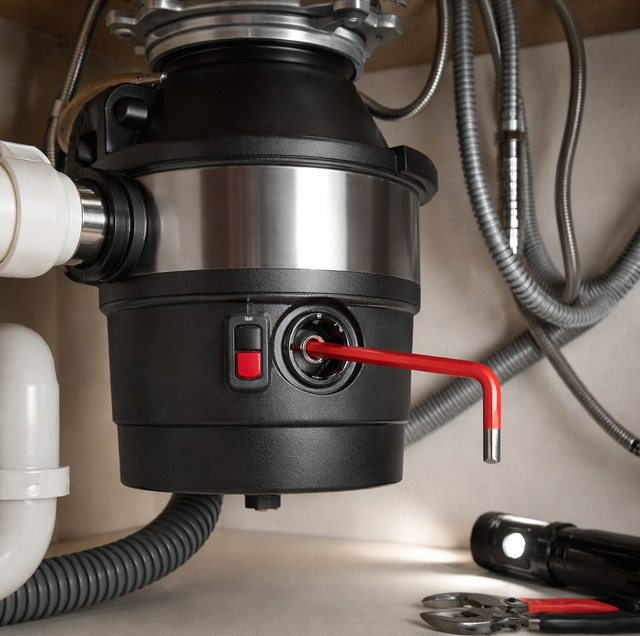
Quick Answer: A hum with no spin almost always means the motor is getting power, but the flywheel is jammed. Cut power at the wall switch first; never reach into the chamber. Free the flywheel with the hex wrench in the bottom port or a broom handle, then press the red reset button underneath.
You flip the switch, the disposal buzzes with an angry electrical hum, and nothing turns. No grinding, no whir, just that low drone. It is a common failure and, in most cases, a fixable one that does not require a new unit or a service call. The key is understanding what the sound is telling you before you touch anything.
What the Hum Actually Means
A disposal that hums is a disposal that still has power. The motor is energized and trying to turn, but something is physically stopping the flywheel, the spinning steel plate at the bottom of the grind chamber. Mounted on that flywheel are two blunt swiveling lugs called impellers. They do not slice like knife blades; they fling food waste outward against the stationary grind ring around the chamber wall, and that ring is what actually shreds the waste.
When a hard object wedges itself into the narrow gap between an impeller and the grind ring, the flywheel locks. The motor keeps drawing current and straining against the blockage, which produces the hum. Left running, that stalled motor overheats within seconds because it is pushing hard while going nowhere.
The usual culprits are predictable: a stray chicken or steak bone, a fruit pit from a peach or avocado, a popcorn kernel gone rogue, a twist tie, or a small spoon or bottle cap that slipped past the splash guard. Even a slug of hardened grease mixed with coffee grounds can set into a paste stiff enough to seize the plate. Once you know the flywheel is simply stuck, freeing it is a mechanical problem, not an electrical one.
A jammed flywheel behaves like a bicycle wheel with a stick shoved into the spokes. The pedals still turn your effort into force, but the wheel cannot move until you pull the stick out. Clear the obstruction, and everything spins again.
Cut the Power Before You Do Anything
This is the step that keeps your hands intact, so it comes first, and it is not optional.
Cut power fully before you go near the chamber. If the unit is plugged into an outlet under the sink, unplug it; if it is hardwired, switch off the breaker that feeds the disposal. Never put a hand down into the disposal, not even with the power off, because a unit that unexpectedly gets power with a hand inside causes serious injury.
Turn the disposal off at the wall switch immediately. A humming disposal is a stalled motor burning itself up. The longer it drones, the closer it gets to tripping its overload or, in a worn unit, cooking the windings. Shut it off the moment you hear the hum.
Never put a hand down into the disposal. Not to fish out a bone, not to feel around, not even with the power off. The impellers and the edge of the grind ring are unforgiving, and a disposal that unexpectedly gets power with a hand inside causes serious injury. Every step below is designed so you never break this rule. Use a flashlight to look, and long-nose pliers or tongs to remove anything you can see, never fingers.
Free the Jammed Flywheel
With the power cut, you have two reliable ways to break the flywheel loose. Try the wrench method first, since it gives you the most turning force.
The Hex Wrench Method: Look at the underside center of the disposal. Most models have a hex-shaped socket there, sometimes called the flywheel turning port. The tool that fits it is a 1/4-inch hex key, the same Allen wrench that often ships taped to the side of the unit or clipped into a bracket under the sink. If yours has wandered off, a standard 1/4-inch Allen wrench works.
Seat the wrench in the port and crank it firmly back and forth. You are manually rotating the flywheel to grind the stuck object loose and knock it out of the gap. Work it in both directions until the wrench swings a full, free circle with no resistance. That free rotation tells you the jam has cleared.
The Broom Handle Method: If your model has no bottom port, or you cannot reach it, work from the top instead. With the power still off, insert the wooden end of a broom handle or a sturdy wooden spoon down into the chamber and wedge it against one of the impeller lugs. Push to rotate the flywheel, then rock it the other way. The idea is identical to the wrench: turn the plate manually until the obstruction shakes free and the flywheel spins without catching.
Once the flywheel moves freely, shine a light in and remove whatever came loose with pliers or tongs. Then run cold water and get ready to restore power.
The Reset Button and Thermal Overload
Here is the part people forget, and it is why a disposal that seems dead sometimes needs one press.
Every disposal has a built-in thermal overload protector. When the motor overheats from straining against a jam, an internal switch trips and cuts power to protect the windings from burning out. That trip pops the reset button, a small red or black button on the bottom of the unit. Until you push it back in, the disposal will do nothing: no hum and no spin, even after you have cleared the jam.
So the sequence matters. Free the flywheel first, then restore power at the outlet or breaker, then press the reset button firmly until it clicks and stays in. If it pops right back out, the motor is still too hot. Wait about ten minutes for it to cool and try again. With the flywheel free and the reset engaged, flip the wall switch with cold water running and the disposal should turn normally.
When It Is Not a Jam
Not every silent disposal is a jammed one, and the sound it makes points you toward the real problem.
If it hums but the flywheel is already free, and freeing it changed nothing, the motor itself may be failing, or the start capacitor that gives it initial torque has gone bad. That is a repair or replacement job rather than a quick fix.
If it makes no sound at all, no hum when you flip the switch, then the motor is not getting power. Check the reset button first, then the wall switch and the breaker. A dead-silent unit usually points to an electrical break, a tripped breaker, a failed switch, or loose wiring, not a jam.
Anything involving the disposal's wiring, a hardwired connection, or a switch that feels loose or scorched is a job for a licensed plumber or electrician. Working inside a powered electrical connection under a wet sink is not a place to improvise.
Preventing the Next Jam
Most jams trace back to a handful of habits, and adjusting them keeps the flywheel spinning.
Feed waste in gradually rather than packing the chamber full and switching it on. Keep the obvious offenders out: bones, fruit pits, and shells have no give and will wedge every time. Fibrous strings like celery and corn husks wrap the flywheel, and starchy loads like potato peels turn to a gluey paste.
Grease deserves its own warning. It pours in as a liquid and hardens into a waxy solid as it cools, coating the chamber and setting up future seizures. Wipe greasy pans with a paper towel before rinsing. A quick habit of grinding a tray of ice cubes now and then helps knock loose buildup off the flywheel and impellers before it hardens into a problem.
Grinding a tray of ice cubes now and then helps knock loose buildup off the flywheel and impellers before it hardens into a problem. Run a strong flow of cold water for a good fifteen seconds after grinding so waste flushes past the impellers instead of settling in the gap.
Frequently Asked Questions
A stalled disposal motor can overheat in as little as ten to fifteen seconds of continuous humming, because it is drawing near-locked-rotor current the entire time. In many units, the thermal overload trips before permanent damage occurs, but repeatedly forcing a jammed unit without cutting power is the fastest way to cook the motor windings past saving.
No. Disposals are engineered to run wet with water as the only lubricant, and their bearings are sealed. Spraying penetrating oil or WD-40 into the chamber contaminates food surfaces, can degrade the rubber splash guard over time, and does nothing to move a bone or pit that is physically wedged. Mechanical rotation with the hex wrench is the correct fix, not a lubricant.
A repeat jam within days often means a fragment of the original object stayed behind in the grind ring gap, or the impeller lugs have worn down. Those swiveling lugs are meant to pivot freely; if one is bent, frozen with rust, or worn flat, waste no longer flings outward properly and re-jams. A unit that seizes weekly despite clear feeding habits is usually near the end of its service life.
No, they protect against different things. The red reset button on the disposal is a thermal overload that trips on motor heat and only cuts power to the disposal. The wall breaker trips on excess electrical current and can cut a whole circuit. A disposal can trip its own reset while the breaker stays fine, which is why checking the reset button first saves you a trip to the panel.
A continuous-feed model runs whenever the wall switch is on, so it can keep humming against a jam until you shut the switch. A batch-feed model only runs when a special stopper is seated and twisted in the drain opening, which removes the wall switch entirely. Batch-feed units add a layer of safety because the chamber must be covered to receive power, but both jam the same way, and both are freed with the same flywheel methods.
Sometimes. If the disposal spins freely but water backs up or drains slowly afterward, the obstruction moved downstream into the P-trap, the curved pipe below the unit, rather than clearing out. Place a bucket underneath, loosen the two slip nuts on the trap by hand or with channel-lock pliers, and clear the debris caught in the bend before reassembling. This is separate from the flywheel jam and addresses drainage, not spinning.
If a disposal hums, jams, or refuses to drain, get it diagnosed and fixed right the first time. MNS Plumbing & Drain Cleaning serves Anthem and the Valley. ROC 262137. Call (602) 362-4524.
