
Why Your Toilet Bubbles When the Washing Machine Drains
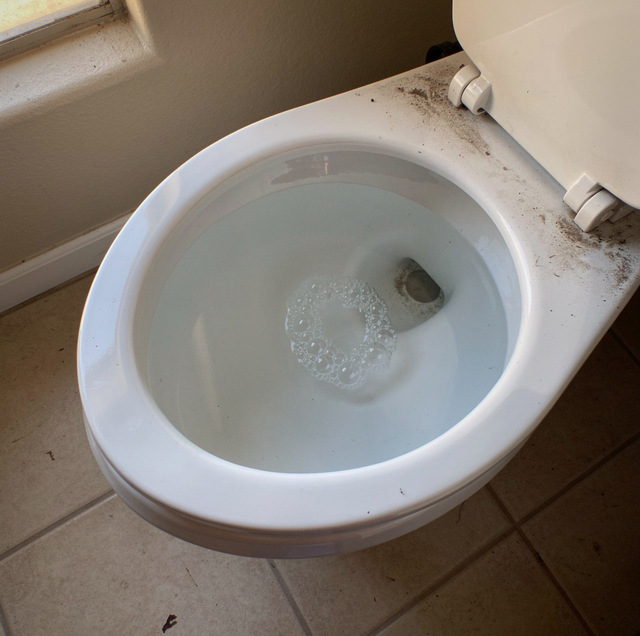
You start a load of laundry, and a few minutes later the toilet gurgles or a ring of bubbles rises in the bowl. It sounds alarming, but it's actually your drain system talking to you. The noise is air moving through water it shouldn't be moving through, and once you understand why, you can tell in a few minutes whether it's background noise or something worth calling about.
What's Actually Happening When You Hear It Bubble
Every fixture in your home, the toilet included, has a trap: a curved section of pipe that holds a small amount of standing water. That water seal is what keeps sewer gas out of your bathroom. Under normal conditions, that seal sits still and quiet.
Bubbling means air is pushing through that seal from below, or being pulled through it from above. Either way, air is moving where only water should be sitting, and the toilet is often the loudest place to hear it because its trap holds a larger volume of water in its seal, which a pressure change can displace more noticeably than the smaller seal in a sink or tub trap. A narrow sink trap might gurgle softly; a toilet, with its large water seal and short, direct path to the branch drain, tends to announce it.
Why the Washing Machine Triggers It Specifically
A washing machine doesn't drain the way a sink or tub does. Sinks and tubs empty by gravity, a slow, steady trickle governed by how fast water can fall through the drain opening. A washer's pump forces several gallons out in a short, forceful burst, sometimes twice in one cycle between the wash and rinse.
That burst behaves differently in a drain pipe than a gravity trickle does. It moves through the branch line like a slug of water with a cushion of air ahead of it and, often, a drop in pressure behind it. Both of those effects need somewhere to go. If the vent system has enough capacity, the air escapes quietly through the vent stack, and nobody notices. If it doesn't, the air finds the next-best path, and in most homes, that path runs straight through the toilet.
Shared Drain Lines: How Fixtures End Up Connected
In many homes, the laundry area and a bathroom are close enough together, or on the same wall, that the washing machine standpipe ties into the same branch drain as the toilet, or into a branch that joins the toilet's line before it reaches the main stack. That's normal plumbing design, not a mistake. Code allows multiple fixtures to share a branch, provided the pipe and vent are sized for the combined load.
The catch is that when two very different types of fixtures share a line, a fast, high-volume discharge from one (the washer) can affect the water seal of the other (the toilet) far more noticeably than it would affect, say, a second toilet on the same branch. The washer's surge is the trigger; the toilet's wide trap is where you hear the result.
The Vent Stack's Job, and What Happens When It Falls Short
Every drain branch is paired with a vent that runs up through the roof or ties into a common vent stack. Its job is to let outside air into the pipe as water drains, so the draining water doesn't create a vacuum behind it. Without that air supply, a fast-draining fixture can siphon: it pulls air, and sometimes the water seal itself, out of the nearest trap to fill the low-pressure space it's creating.
That's one way the bubbling shows up: negative pressure that pulls air backward through the toilet's water seal as the washer's discharge rushes past.
The other direction is positive pressure. As that slug of wash water moves down the branch, it compresses the air ahead of it. If the vent can't relieve that pressure fast enough, either because it's undersized for the fixtures it serves, partially blocked, or simply too far from where the washer ties in, the compressed air pushes back out through the path of least resistance. Again, that's usually the toilet, because its large water seal is easier for that pressure to displace than the smaller trap seal in a sink or tub drain would.
Vents can lose capacity for a few reasons: debris or a bird's nest at the roof termination, an undersized vent pipe when a washer was added to a branch during a remodel without upsizing the vent to match, or a mechanical vent device that's stuck or failing. All of them reduce the same thing: the amount of air the system can move in or out on demand, and all of them can make a toilet bubble when the washer drains.
When a Partial Blockage Is the Real Cause
Venting issues are the most common explanation, but they're not the only one. A partial blockage sitting downstream of where the washer and toilet tie in changes the picture. Instead of a venting shortfall, you get a bottleneck: the surge of wash water hits a branch or main line that's already narrowed by buildup, lint, grease, or root intrusion, and can't clear fast enough. The backed-up water and air have nowhere to go but back up through the nearest open path, which is, again, the toilet.
This version tends to look and sound a little different than a pure venting quirk. It's often stronger, more consistent, and it tends to come with other clues: a slow tub or shower drain, water rising slightly in the toilet bowl before it settles, or a faint sewer odor that a simple air-pressure imbalance usually doesn't produce on its own.
Normal Quirk or Warning Sign? How to Tell the Difference
A little bubbling isn't automatically a problem. Plenty of homes have a washer and a bathroom sharing a branch, and an older vent system built with less margin than current fixtures demand. In that setup, a light gurgle or a brief ring of bubbles right as the washer hits its drain cycle, especially on a full load, can just be the system working at the edge of its capacity. If it happens the same way every time, doesn't get louder or more frequent, and nothing else in the house acts up, it's usually not urgent.
Treat it as a signal worth checking further when any of these show up:
- The toilet bubbles or gurgles every time you run any fixture, not just the washer
- The pattern is getting more noticeable over weeks or months rather than staying the same
- Other drains, especially a tub or shower on the same branch, run slow at the same time
- Water rises in the toilet bowl, or briefly surfaces in the tub, when another fixture drains
- You notice a sewer smell along with the bubbling
- Bubbling happens with multiple fixtures on different parts of the house, not just one shared branch
One or two of these together point away from a simple venting quirk and toward a partial blockage or a vent that needs attention rather than one that's just running close to its limit.
What to Check Before You Call a Plumber
A few minutes of observation tells you a lot. Run the washer again and watch the toilet: does it happen on every cycle, or only sometimes? Try running a tub or sink for a couple of minutes on its own, with nothing else draining, and see if the toilet reacts at all; if it does, the issue isn't specific to the washer, which points more toward a shared-branch or main-line issue than a washer-only venting quirk. Check whether the washer itself finishes draining fully and on schedule, since a slow-draining washer alongside a bubbling toilet suggests the branch downstream is struggling to keep up. And take note of any sewer odor, since that's a detail worth mentioning if you do end up calling someone.
When to Stop Troubleshooting and Get It Looked At
If the bubbling is occasional, consistent, and isolated to the washer's drain cycle with nothing else affected, it's reasonable to keep an eye on it rather than treat it as an emergency. A camera inspection can pinpoint exactly where a branch narrows or where a vent connection has failed, turning guesswork into a specific fix rather than a repeated cycle of symptom clearing. If a main line turns out to be the source and digging is required, trenchless repair options are often used in place of a full excavation when the soil is hard, rocky, or compacted enough to make traditional digging slow and disruptive.
Once you see slow drains elsewhere, sewer odor, water surfacing in other fixtures, or bubbling that's clearly getting worse, that's the point to stop guessing and get a proper look, rather than waiting for a slow drain to become a stopped one.
Frequently Asked Questions
Not necessarily. Bubbling on its own is air moving through the trap, not water reversing direction. A true backup, water rising and staying up, or coming up through a floor drain or tub, is a more advanced sign than bubbling by itself and usually means a blockage has progressed further downstream.
Yes, but only if the restriction sits in the shared branch itself, not inside the toilet's own trap. A clog isolated to the toilet's trap sits upstream of the shared line and has no way to affect how fast the washer empties. A restriction in the branch downstream of where the two fixtures tie in is different: it can back pressure into the line the washer empties into, so the washer's drain cycle takes longer to finish, or the machine flags a drain-error code. If both the toilet and the washer seem slow around the same time, that's a stronger clue for a shared-branch restriction than for a venting-only issue.
Generally, yes, if the bubbling is mild and isolated to that moment. Air moving through a trap doesn't damage anything on its own. One way to tell normal bubbling from a developing problem is the pattern: a quick ring of bubbles that rises as the pump kicks in and settles within a few seconds is typical of a system running close to its venting margin. Bubbling that sputters on and off through more of the drain cycle, or that grows more forceful load after load, is more consistent with a blockage that's narrowing over time. If you see a longer or more erratic pattern, water backing up, or a smell developing, continued use can push a partial blockage further along rather than solve it.
Larger loads and faster spin-drain settings push more water through the pump in a shorter window, which puts more momentary demand on the vent and branch than a small, gentle cycle does. A branch and vent that handle a light load fine can still get pushed past their comfortable margin by a heavy towel or bedding load, which is why the noise can be inconsistent from one wash to the next.
Age by itself isn't the deciding factor; what matters is whether the vent was ever sized for the fixtures currently tied into it. When a plumber is trying to confirm a venting-capacity problem rather than a blockage, they'll typically check the vent pipe's diameter against the fixture load it serves and inspect the roof termination for debris or a bird's nest. If the vent diameter checks out and the termination is clear, that points away from a venting shortfall and toward a partial blockage as the more likely explanation, regardless of how old the house is.
It depends on which type of pressure problem is causing the bubbling. A mechanical air admittance valve is a one-way device: it opens to let air into the branch when a fast-draining fixture is pulling a vacuum, which addresses the negative-pressure, siphoning version of this issue without a full vent pipe running to the roof. It seals against outward airflow, though, so it does nothing for the positive-pressure version, where compressed air is pushing back out through the toilet. It also only works where code and the specific branch layout allow it, and it won't help if a downstream blockage, rather than venting capacity, is the actual cause.
Get a shared-line or venting issue diagnosed at the source — book a camera inspection and drain evaluation. MNS Plumbing & Drain Cleaning serves Anthem and the Valley. ROC 262137. Call (602) 362-4524.
