
Water Heater Leaking? 5 Sources and When to Worry
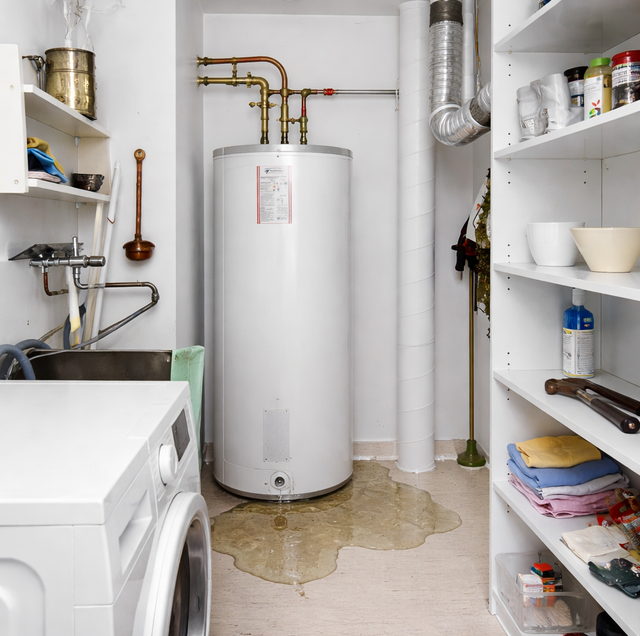
Quick Answer: A leaking water heater has a handful of likely sources, and they range from a loose fitting you can tighten to a rusted-through tank that needs replacing. Before anything else, cut power or gas to the unit and shut the cold water supply, then find exactly where the water is coming from. The location tells you whether this is a quick repair or the end of the tank's life.
A wet floor near your water heater is one of those problems that could mean almost nothing or could mean the whole unit is done. The spread of possibilities is wide, which is why guessing is a bad idea. A drip at a fitting and a crack in the tank both leave the same puddle on the slab, but one costs a wrench and ten minutes while the other means the appliance is finished.
The single most useful thing you can do is figure out *where* the water is coming from. Every source leaks from a specific spot, and once you know the spot, you know roughly what you are dealing with. So the job starts with the parts, then moves to the sources top to bottom, then to what you should actually do.
Know the Parts Before You Chase the Leak
A tank-style water heater is a steel cylinder with a few connection points, and water only escapes from one of them at a time. Knowing the five candidates makes the hunt fast.
The tank itself is the tall steel body, lined with glass on the inside and wrapped in insulation and a sheet-metal jacket. You never see the actual steel; you see the jacket. Water inside sits under household pressure and stays hot around the clock.
The inlet and outlet connections are the two pipes at the top. Cold water comes in through one, hot water leaves through the other. They are threaded or soldered fittings, sometimes joined with flexible braided connectors.
The temperature and pressure relief valve, called the T&P valve, sits on the top or upper side of the tank with a pipe running down from it. It is a safety device that opens if pressure or temperature inside climbs too high, releasing water so the tank does not become dangerous.
The drain valve is the spigot near the bottom, the one that looks like an outdoor hose faucet. It exists so you can empty the tank for maintenance.
The tank bottom is where the steel sits closest to failure. Sediment collects there, holds moisture against the metal, and rust works from the inside out over years.
Water showing up at the top usually points to connections or the T&P. Water at the bottom points to the drain valve, condensation, or the tank itself. That top-versus-bottom split is your first clue.
The Five Sources, Top to Bottom
Loose or corroded water connections: The inlet and outlet fittings at the top take on stress from thermal expansion every time the burner or element fires. Over years, a threaded joint can loosen slightly, or a braided connector can corrode at the crimp. This is often the friendliest source to find, because the water sits right at the fitting and traces straight down the pipe. Many connection leaks respond to a careful quarter-turn with a wrench or a fresh connector. If the fitting is heavily corroded or weeping through the metal rather than the threads, replacement of the connector is the fix.
A weeping or discharging T&P valve: The T&P valve is designed to release water, so a little discharge is not automatically a defect. It may be doing exactly its job, dumping water because pressure or temperature inside the tank has climbed past a safe limit. That is the important distinction. Sometimes the valve itself has worn out and weeps even at normal pressure, which calls for a new valve. But sometimes the valve is fine and is warning you that something upstream is wrong, such as thermal expansion with nowhere to go or a thermostat set too high.
Never cap, plug, or block a discharging T&P valve. It is the tank's pressure release, and sealing it converts a leak into an explosion hazard. If it discharges, have the cause diagnosed rather than silenced.
A dripping drain valve: The drain valve at the bottom is a plastic or brass spigot, and it is a common nuisance leak. It can fail to seat fully after a maintenance drain, or its washer can degrade with age and heat. A drip here pools directly under the valve. Snugging the valve or capping it with a threaded hose cap sometimes stops a minor seep, though a valve that will not seal wants replacement. The good news is that a bad drain valve says nothing about the health of the tank itself.
Condensation that only looks like a leak: Not every puddle is a leak. When cold water refills a tank, or during heavy hot-water use, the cool tank surface can sweat and drip onto the floor exactly like a slow leak. Condensation shows up as a light, even film of moisture across the tank body or a thin puddle with no single source, and it clears once the water inside warms up. A gas unit running hard can also produce condensation that drips onto the burner area early in a heating cycle. Before you condemn a tank, rule out sweating, because a tank that only sweats is not failing at all.
A corroded tank bottom, the worst case: This is the source nobody wants. The glass lining inside the steel tank eventually cracks or wears thin, water reaches the bare steel, and rust eats through from the inside. When the failure is at the bottom, water seeps from under the jacket with no fitting or valve involved, and there is no repair. The steel body cannot be patched. A tank leaking from its own body is telling you the appliance has reached the end of its service life and needs to be replaced. Left alone, a corroded tank can also let go suddenly and flood the area around it.
What to Do the Moment You Find Water
Speed and safety matter more than diagnosis in the first few minutes. Treat a leaking water heater as a live appliance full of scalding water and, depending on the model, electricity or gas.
Cut the energy first: On an electric unit, switch off the breaker that feeds the water heater at the panel. On a gas unit, turn the gas control knob to off. Do not skip this. Hot water plus a shorting element or a running burner is how a small leak becomes an injury.
Shut the cold water supply: Find the shutoff on the cold inlet pipe at the top of the tank and close it. That stops fresh water from feeding the leak. If you cannot find or move that valve, close the main water shutoff for the house.
Drain it if the leak is significant: Once power and water are off, you can run a hose from the drain valve to a lower drain or outside to lower the water level and reduce flooding. A slow weep may not need this; a steady flow does.
Keep water away from electrical: Standing water near outlets, the electric unit's junction box, or the breaker panel is a shock hazard. If water is spreading toward any of those, stay clear and get a professional in.
If you smell gas, stop: A gas odor around the heater is a separate emergency. Do not switch anything on or off, leave the area, and call your gas utility from outside. Do not hunt for the leak yourself.
Finding the Exact Source
With the unit safe, diagnosis is mostly patience. Dry every surface of the water heater completely with a towel, including the top fittings, valve bodies, and the base.
Dry every surface of the water heater with a towel, including the top fittings, valve bodies, and the base, then watch where water reappears first. A film that spreads evenly and then dries as the tank heats points to condensation rather than a leak. Then watch. Water reappearing at a top fitting point to the connections.
Water at the end of the T&P discharge tube points to the relief valve and the pressure question behind it. Water at the drain spigot points to that valve. A film that spreads evenly and then dries as the tank heats points to condensation. Water seeping from under the jacket at the base, with every fitting dry, points to the tank body.
Follow the T&P discharge tube down to its open end and check whether that is where the water is arriving. If it is, the valve is discharging, and the message is about pressure and temperature inside the tank, not a random drip. That finding should send you toward a diagnosis of the cause, not a plug in the pipe.
Think of the hunt like tracing a roof leak: the water shows up at the lowest point it can reach, not always where it started, so drying everything and watching the first reappearance tells you far more than the puddle on the floor ever could.
Repair or Replace
Once you know the source, the decision usually makes itself. A loose connection, a bad drain valve, or a worn T&P valve are repairs, and a healthy tank is worth keeping in service. Condensation is not even a repair; it is a non-problem once confirmed.
A leak from the tank body is different. Tank steel cannot be repaired, so a bottom or body leak means replacement, full stop. Age tips the scales on borderline cases. A tank-style water heater typically lasts around eight to twelve years, and a unit in that range that is leaking from its base has almost certainly reached the end. Pouring a repair into a tank that old rarely pays off, because the next failure is close behind. A younger tank with a fitting or valve leak, by contrast, is usually worth the fix.
When the source is unclear, or when a T&P valve is discharging and you do not know why, that uncertainty is itself a reason to bring in a licensed plumber. Pressure and temperature faults are exactly the failures where a wrong guess carries real risk.
Frequently Asked Questions
Wipe the tank bone-dry, then run a large hot-water draw such as a long shower and watch the tank body during the refill. Condensation forms as a uniform sweat across the cold steel and clears within an hour as the incoming water heats. A true leak returns to the same single spot, a fitting or the base, and keeps coming regardless of tank temperature. Cranking the setpoint too low on an oversized tank makes sweating worse, so a very cool tank in a humid room is a condensation clue.
Not directly, but it is connected. The anode rod is a sacrificial metal rod that corrodes on purpose so the tank steel does not. Once the rod is fully consumed, corrosion turns to the tank itself, which is what eventually produces a bottom leak. Replacing a spent anode rod every few years is a maintenance step that extends tank life. A neglected anode is often the hidden reason a tank rusts through early, though the rod is not the thing you see leaking.
Mineral-heavy water drops scale and sediment that settle on the tank bottom. That layer traps heat against the steel, drives localized overheating, and accelerates the corrosion that ends in a bottom leak. Sediment also insulates the burner or element, making the unit work harder. Flushing the tank once a year through the drain valve clears sediment and is the single best habit for stretching a tank's life in a hard-water area.
A minor fitting or drain-valve seep can sometimes wait a short time for a scheduled repair, but a tank-body leak should take the unit out of service, because a corroded tank can fail all at once and flood. Any leak reaching electrical connections or a gas burner is an immediate stop. When in doubt, shut the cold supply and cut power or gas, then have it looked at rather than running a compromised tank.
An expansion tank is a small pressurized tank plumbed into the cold line that absorbs the extra volume created when water heats and expands. On a closed plumbing system with a backflow preventer or check valve, that expanded water has nowhere to go, pressure spikes, and the T&P valve discharges to relieve it. A properly charged expansion tank soaks up the surge, so the relief valve stops weeping. A failed or waterlogged expansion tank is a frequent cause of a T&P valve that drips for no obvious reason.
No, the failure map is different. A tankless unit has no stored reservoir to rust through at the bottom, so it does not fail from a corroded tank body. Its leaks come from the internal heat exchanger, the connection fittings, or the pressure relief valve instead. Scale buildup inside the heat exchanger is the leading long-term threat, which is why tankless units call for periodic descaling. The safety rule on the relief valve is identical: never block it.
Find the leak before it floods the floor — get a same-day diagnosis and a straight repair-or-replace answer. MNS Plumbing serves Phoenix, Scottsdale, and Anthem. ROC 262137. Call (602) 362-4524.
