
What a Sewer Cleanout Is and Why It Saves You
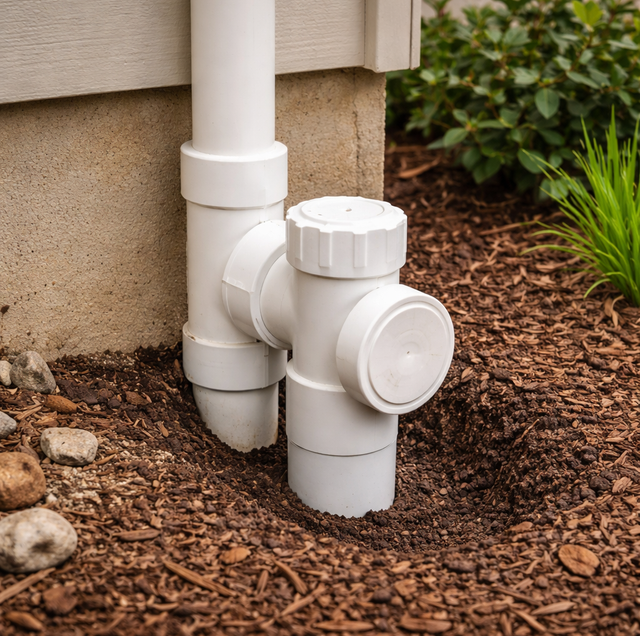
Quick Answer: A sewer cleanout is a capped access point on your main drain line. Removing the cap gives a plumber a direct opening into the sewer pipe, so a clog can be cleared, a camera can be run, or the line can be jetted without pulling a toilet or digging up the yard.
Most people walk past their sewer cleanout for years without knowing what it is. It sits low to the ground, often near the foundation, and it does nothing visible until the day a drain backs up. Then it becomes the single most useful fitting on the property.
What a Sewer Cleanout Actually Is
Every fixture in a house- sinks, tubs, toilets, the washing machine- drains into branch lines that all merge into one main sewer line. That main line carries everything out to the city sewer or the septic tank. A cleanout is a short vertical or angled pipe that ties directly into that main line and rises to a reachable spot, capped at the top.
The cap threads or twists off to expose the pipe opening. With the cap removed, a plumber has a clean, straight shot into the line in one or both directions. No fixture has to come apart. Nothing gets excavated. The access is built into the plumbing on purpose so that clearing and inspecting the sewer is a routine job rather than a demolition project.
A garden hose spigot works the same way in spirit: a permanent tap into a hidden line, sitting quietly until you need water from it. The cleanout is that tap for the sewer, and reaching the main line through it takes minutes instead of hours.
Where Cleanouts Are Located
Cleanouts show up in a few predictable places, and a house can have more than one.
Outside near the foundation: The most common spot is a few feet out from an exterior wall, roughly where the main line leaves the house. Look for a round or square cap sitting flush with the ground, or a short pipe stub sticking up out of the dirt, or a small box.
At or near the property line: Many systems place a second cleanout close to where the private line meets the public sewer. This one lets a plumber work the stretch of pipe running under the yard between the house and the street.
In a basement or crawlspace: Where the main line runs indoors before exiting, the cleanout may be a capped fitting on a horizontal or vertical run of pipe, often near the floor.
A two-way cleanout: Some installations use a Y-shaped fitting with two openings, one angled back toward the house and one angled toward the sewer. That design lets a plumber send a cable or camera either direction from a single access point, which narrows down where a blockage sits.
Not every home has an obvious one. Older houses in particular were sometimes built without an accessible exterior cleanout, which changes how a clog gets handled.
What the cap looks like: Caps are usually plastic (ABS or PVC) or brass, three to four inches across for a main-line cleanout. A threaded plug has a square nub or raised bar on top for a wrench. Some sit inside a small ground box with a lid; others cap a pipe that rises a few inches above grade. The color is often white, black, or a dull metal, and the top may read "CO," "cleanout," or "sewer."
Why a Cleanout Matters
The value of a cleanout is speed and access, and both of those turn into savings when something goes wrong.
Faster, direct access to the line: Without a cleanout, reaching the main sewer often means pulling a toilet off its flange and running a cable down through the closet bend, or in the worst case, digging to expose the pipe. A cleanout skips all of that. The plumber removes a cap and starts working, which shortens the visit and cuts the labor involved.
A built-in relief point: When the main line clogs, wastewater has nowhere to go, and pressure builds behind the blockage. A cleanout gives that backup a place to escape at ground level, outside, rather than pushing up through the lowest drain inside the house, usually a shower or floor drain. An exterior cleanout overflowing in the yard is unpleasant, but it beats the same volume coming up in a bathroom.
A diagnostic starting point: Because the cleanout opens straight onto the main line, it's where a plumber begins figuring out whether a problem is local to one fixture or sitting in the main run that serves the whole house.
How a Plumber Uses It
Once the cap is off, the cleanout becomes the working entrance for three common tools.
A drain snake or auger: A motorized cable feeds into the opening and spins down the line to break up or hook the clog, whether that's a wad of wipes, grease, or roots that have worked into a joint.
A sewer camera: A waterproof camera on a flexible rod travels the pipe and sends video back to a screen. The plumber sees the actual condition inside: a root mass, a collapsed section, a belly where water and waste pool, or a foreign object. That footage decides the repair instead of guesswork.
A hydro-jetter: A high-pressure hose sends water down the line with enough force to scour the pipe walls, cut through grease and root intrusion, and flush debris toward the sewer. Jetting cleans the full diameter of the pipe rather than just punching a hole through the clog.
All three enter through the same capped opening. That's the entire point of the fitting, and it's why a working cleanout makes drain service quicker and less invasive.
When the Cleanout Overflows
An overflowing cleanout looks alarming, but read correctly, it's doing you a favor. When wastewater rises out of the cap or the plug is being pushed up, it's telling you the main line downstream is blocked, and the system is relieving pressure at that point on purpose. The overflow outside is buying time before sewage backs up through drains inside the house.
Treat it as an early warning. If you catch it while it's seeping at the cleanout, you can act before the problem migrates indoors.
What to do if yours is overflowing:
- Stop all water use in the house immediately. Every flush, load of laundry, or running faucet adds to the volume behind the blockage.
- Keep people and pets away from the overflow. Raw sewage is a biohazard.
- Call a plumber and describe what you're seeing.
Keep people and pets away from the overflow, since raw sewage is a biohazard. Opening a cleanout cap yourself when the line is under pressure is not a good idea, because a capped line that is backed up can hold pressurized wastewater and sewer gas behind the plug, and cracking it can release both.
Opening a cleanout cap yourself when the line is under pressure is not a good idea. A capped line that's backed up can hold pressurized wastewater and sewer gas behind the plug, and cracking it can release both. If a plumber does open one under those conditions, it gets opened slowly, from the side, standing clear, with gloves on. Clearing a mainline blockage, running a camera, and jetting are all pro work, and it helps to tell the plumber if any chemical drain cleaner went down the line, since that caustic liquid can be sitting right behind the cap.
No Cleanout on Your Property
Plenty of older homes were plumbed without an accessible cleanout, which forces plumbers to reach the main line the slow way, through a pulled toilet or a roof vent. If a house has repeated main-line clogs and no good access, adding a cleanout is a worthwhile upgrade. A plumber ties a new fitting into the main line at a reachable spot and brings the cap up to grade, so every future service call starts from an easy opening instead of a teardown.
Frequently Asked Questions
They serve opposite jobs. The vent stack on the roof lets air into the drain system so water flows smoothly and traps don't get siphoned; it's about airflow. A cleanout is about physical access to clear and inspect the pipe. A plumber can sometimes reach the main line through the roof vent, but it is an awkward, overhead route compared with a ground-level cleanout.
Keep it visible and reachable. Burying a cleanout under mulch, a flower bed, pavers, or a deck means a plumber has to find and uncover it during an emergency, which adds time and disruption. A common fix is a small removable green or brown valve box set flush with the ground that hides the cap for looks but lifts off in seconds.
That's a two-way cleanout, a Y-fitting with one opening angled toward the house and one toward the street. It lets a technician run a cable or camera in either direction from one spot, which helps pinpoint whether a blockage sits under the house or out toward the main sewer. It's a convenience feature, not a sign of a problem.
Snug, not cranked down hard. A cap left loose can let sewer gas seep out and let dirt and debris fall into the line, while over-tightening a plastic plug can crack the fitting or seize the threads. Hand-tight plus a light turn with a wrench is the usual target, and a worn or cross-threaded cap should be replaced so it seals properly.
The cap and the exposed pipe stub take the abuse. Plastic caps get brittle and crack from years of sun exposure, brass plugs corrode, and a stub sticking above grade can get hit by a mower or a vehicle. A cracked or missing cap should be swapped out, because an open cleanout invites roots, dirt, and rodents into the sewer line.
For a home with no history of trouble, a camera inspection every few years is reasonable, and sooner if you notice slow drains across multiple fixtures, gurgling toilets, or a sewer odor near the cleanout. Homes with large trees near the sewer path or older clay and cast-iron pipe benefit from checking more often, since roots and pipe decay are the usual culprits behind repeat clogs.
Not sure where your cleanout is or dealing with a backup — get a plumber on it fast. MNS Plumbing serves Anthem, Phoenix, and Scottsdale. ROC 262137. Call (602) 362-4524.
