
Does Pressure-Assist Beat Gravity on Repeat Toilet Clogs?
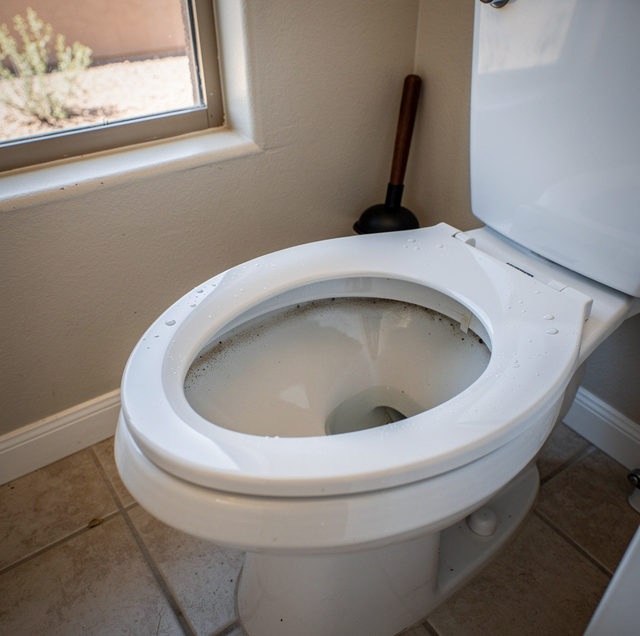
Under the lid of one toilet sits a tank of standing water held back by a rubber flapper. Under the lid of the next sits a sealed black vessel that holds water and trapped air together, and releases both at once. Both fixtures ship with the same bowl shape, seat, footprint on your bathroom floor, and connection to your drain.
The difference shows when a bowl has to clear something. If you take a plunger to the same toilet every few weeks while the rest of your house drains fine, the fixture itself is part of what you are fighting, and the flush design under that lid is the part you can change when your old bowl comes out.
The Sealed Vessel and the Head of Water Above It
A gravity toilet works on the head. The tank sits above the bowl, the flapper lifts, and the weight of the water column above the flush valve is the only force moving anything. Raise the level in your tank, and you raise that force. There is no second lever, which is why the flush is quiet and why it leans on tank volume.
A pressure-assist toilet puts a sealed vessel inside that same porcelain tank. Supply water enters through a small inlet, and because nothing escapes, it squeezes the air already inside into a smaller space. That trapped air is stored energy. When the actuator opens the discharge, the air expands and drives the charge through the bowl jet faster than the head moves it.
Trapway Velocity and the Clog That Comes Back Weekly
A trapway is the S-shaped passage cast into the back of the bowl, and it is the only route to the drain. A repeat clog re-forms in the same inch of that passage, at the weir where the trapway turns upward before it drops. Something has to carry the load over that turn. If it stalls there, the next flush pushes into a partly blocked passage and stalls in the same place, which is the pattern behind a plunger that lives beside your toilet.
A gravity flush moves the load by starting a siphon. The tank has to dump fast enough to fill the trapway completely, and only once the passage is full does the falling column on the far side pull everything behind it. That start is fragile. A tank that empties slowly, a flapper that closes early, or a partly closed supply stop all leave the trapway part full, and a part-full trapway never siphons. You get a flush that looks normal and clears nothing.
A pressure-assist flush does not wait for a siphon. The stored air pushes the whole charge into the trapway in about a second, so the passage fills and the load moves on the burst rather than on the pull of a siphon. On a bowl that clogs weekly, the split is simple. A gravity toilet clears by volume delivered over time, and a pressure-assist toilet clears by speed delivered all at once. You are looking at a velocity problem, not a volume problem.
Does a Bigger Flush Volume Fix a Repeat Clog?
Volume is capped, and the cap is set by the federal government. 1.28 gallons per flush or less is the labeled water-efficient level, and 1.6 gallons per flush is the current federal standard.
A repeat clog cannot be answered with a bigger tank. Low-flow toilets of the 1990s were sometimes associated with performance issues, and manufacturers redesigned them in response. Dual-flush models split that capped volume between two buttons, and this blog's dual-flush explainer covers how. The lever left is speed, and the design under your lid controls it.
The Noise a Compressed Air Charge Makes at Refill
Noise separates the two designs more sharply than anything else in a house, and the separation is not simply loud against quiet. A pressure-assist discharge is a short, hard burst with a hiss underneath it, and it is over in about a second, after which the room goes quiet while the vessel recharges. A gravity discharge is longer and softer, a swirl and a gurgle that fades out over several seconds. The two really part company at the refill. A gravity-fill valve throttles down as the float rises, so its hiss tapers off, while a pressure-assist vessel refills against line pressure through a small inlet at a steady note that stops abruptly when the vessel is full.
That steady note is the one people notice at night, because a sound holding one level and then stopping draws more attention in a quiet house than one that fades out under the door.
None of that matters on its own, but it does place the fixtures. In a two-bathroom house, the pressure-assist unit belongs in the bath that takes the traffic and the clogs, and the gravity unit belongs beside a bedroom. If your repeat clog is in the quiet bathroom, you are choosing between a sound you will hear at night and a plunger you already keep in your closet.
Parts, Cartridges and What a Plumber Can Still Replace
Gravity internals are commodity parts. A flapper, a fill valve and a flush valve seat sit on the shelf at every supply house; they cross between brands with a chart, and most toilet leaks trace back to an old or worn flapper made of rubber, plastic or silicone. A twenty-year-old gravity toilet can be back in full service after one visit.
A pressure-assist unit is a sealed assembly. When the vessel itself fails, the whole cartridge comes out, and a new one goes in, instead of a part off a shelf. It is the thing to ask about before your fixture goes in rather than five years later, because a discontinued vessel leaves you a good bowl with no way to flush it.
The Date Code on Top of a Pressure Vessel
Pressure vessels have a recall history you can check yourself in a minute. A federal safety recall dated July 14, 2016 covers a run of pressure-assist flushing systems built from July 2009 through April 2011: about 453,000 units in the United States and about 12,000 more in Canada. An earlier run built from October 1997 through June 2009 had already been recalled.
A bursting pressure vessel throws porcelain at whoever is standing over it, so check the date code by sight alone and leave any vessel servicing to a plumber.
The label on top of the vessel carries a 16-character serial number whose first six numerals are the date code in MMDDYY form. The hazard: the system can burst at or near the vessel weld seam, releasing stored pressure that can lift the tank lid and shatter the tank, posing impact and laceration hazards, as well as property damage. The remedy stays outside the tank: stop using the toilet, turn off the water supply, flush to release the internal pressure, and contact the manufacturer for a free repair kit.
The Rim Holes and the Jet at the Bottom of the Bowl
Whatever sits in the tank, the bowl gives water exactly two ways in. The rim holes beneath the lip wash the bowl's sides, and one jet at the bottom fires into the trapway's throat. That jet does the real clearing on every flush.
Scale narrows both openings over years of hard water, and a partly plugged jet drops a pressure-assist flush back toward gravity performance while the vessel still works. When a plumber looks at your recurring clog, that jet is often the first thing they check in your bathroom.
Frequently Asked Questions
Yes, and the figure is printed on the unit's own specification sheet. A pressure-assist vessel recharges from your supply line and from nothing else, so it lists a minimum static supply pressure the way a water heater lists a working pressure. Your fixture behind a half-closed angle stop can sit under that number and flush weakly for years before you notice.
" Quiet at your fixture" and "quiet through your bedroom wall" are two questions. Most of what a bedroom hears travels the supply riser and the framing it is clipped to, so a braided connector and an isolated stop change your night more than your choice of tank does.
The inlet screen. A pressure-assist vessel draws its charge through a small filtered inlet, and a screen packed with scale or pipe debris starves the vessel, so your flush weakens to a dribble while the toilet looks and sounds normal between uses. It mimics a dead cartridge closely enough that good units get replaced, so it is worth asking whether your screen was cleaned before you agree to a new vessel for your bathroom.
You can usually tell from the doorway. The flush is a short, hard burst that ends abruptly; your porcelain tank does not sweat the way a tank of standing water does, and many models trip from a push-button set into the lid, whereas a gravity toilet uses a side lever you reach in the dark.
Not by moving a vessel into your old tank. The vessel, the tank and the bowl are engineered together, and the bowl's jet and trapway are sized for the discharge the vessel produces, so a conversion means a whole new fixture for you. The rough-in dimension, the closet flange and the supply stop carry over, so your floor and your wall stay untouched by the swap.
Yes. Every labeled tank-type toilet must meet four performance requirements. One is waste extraction: clearing soybean paste test media and toilet paper, meant to be representative of human waste, from the bowl. The other three cover mixed-testing media flushability, bowl-surface cleaning, and drainline waste transport. These requirements cover every labeled tank-type toilet and do not separate the two designs, so your unit and your neighbor's cleared the same bench.
Have a toilet that keeps clogging checked before the next fixture goes in — a plumber looks at the trapway, the flush design, and the date code on any pressure vessel already sitting in your house. MNS Plumbing & Drain Cleaning serves Anthem and the Valley. ROC 262137. Call (602) 362-4524.
