
PEX vs. Copper Repiping: Which Wins in Hard Water?
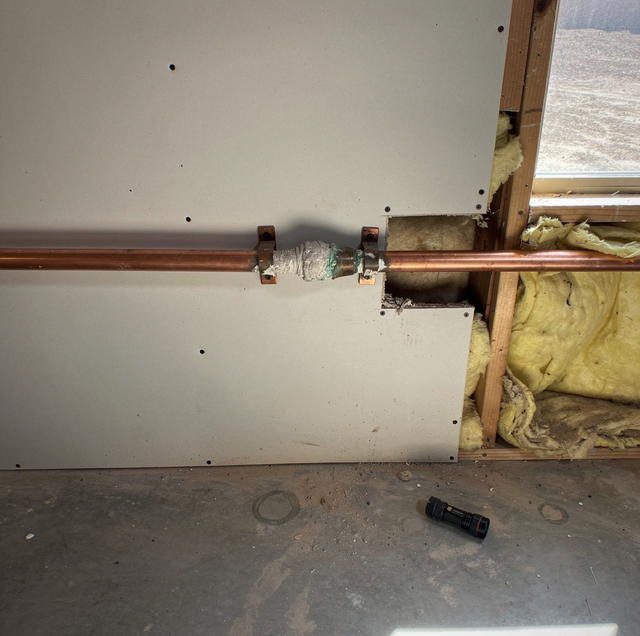
A plumber cuts a small access hole to reach a failed fitting, and the pipes on either side of the cut tell their own stories. Copper that's carried hard, mineral-heavy water for a couple of decades often shows a thin crust of scale inside, sometimes a greenish stain bleeding through the wall around a joint. PEX from the same era usually looks almost the same as the day it went in on the outside, though it isn't immune to its own set of problems. That difference is exactly why "PEX or copper" becomes a real decision once a home's water is hard enough to leave chalky rings on faucets and a crust on the showerhead, rather than a coin flip between two interchangeable products.
What Hard Water Does To A Pipe Over Time
Hardness comes from dissolved calcium and magnesium picked up long before the water reaches a house. Those minerals don't just sit in suspension forever. Heat, pressure changes, and the simple friction of moving through a pipe all encourage them to drop out of solution and bond to the nearest surface, whether that surface is a water heater element, a faucet aerator, or the inner wall of a supply line. Given enough years, that buildup narrows the usable diameter of a pipe and changes how the pipe wall interacts with everything flowing past it.
What changes between materials is how each one reacts to that same mineral load, and mineral scale is only half of what hard water can do. The other half is a chemical relationship between the water and the pipe material itself, which is where copper and PEX actually part ways.
How Copper Responds To Mineral-Heavy Water
Copper is a metal, and metal corrodes when the water running through it is chemically aggressive: low pH, high dissolved oxygen, or certain mineral combinations that attack the metal at the surface rather than evenly across it. That corrosion doesn't happen at a uniform rate. It settles at small, specific points, and those points slowly deepen into pits until one finally breaks through as a pinhole leak, often decades after installation, and often with very little warning beyond a damp spot on a ceiling or a persistently wet patch on a slab.
Scale adds a second layer on top of that. As mineral deposits build up on the inner wall, they can trap water against the pipe, accelerating localized corrosion beneath the deposit rather than protecting the metal. So in hard water specifically, scale and corrosion aren't two separate problems sitting side by side; they tend to feed each other, and a copper system in hard water can show both narrowing from scale and pitting from corrosion in the same section of pipe.
None of this means copper fails quickly. A well-installed copper system in reasonably balanced water can last many decades, and copper has a long track record, allowing a plumber to roughly predict how a given wall thickness should hold up under known water conditions. The variable that changes the math is exactly how hard and how chemically aggressive the water actually is, since that determines how much of copper's long service life gets used up early.
How PEX Responds To Mineral-Heavy Water
PEX is a cross-linked polyethylene plastic, and plastic doesn't corrode the way metal does. There's no electrochemical reaction between hard water and the pipe wall, so PEX doesn't develop the slow, internal pitting that eventually opens a pinhole in copper. Scale can still form inside a PEX line the same way it forms on any surface exposed to hard water, but because there's no corrosion process working beneath that scale, PEX doesn't lose structural wall thickness the way a corroding metal pipe can.
That doesn't mean PEX is immune to hard water's other effects. Scale buildup inside PEX still narrows the usable diameter over time and still contributes to reduced flow at fixtures fed by an older, heavily scaled line, the same practical symptom a homeowner notices whether the pipe underneath is PEX or copper. PEX also has its own list of failure points that have nothing to do with hardness: UV exposure before or during installation degrades the material, certain older PEX formulations reacted poorly with specific water treatment chemicals in ways manufacturers have since addressed, and a poorly crimped or expanded fitting can fail regardless of what's flowing through it. None of those are hard-water problems specifically, but they matter just as much when weighing how a PEX system will actually perform over its lifespan.
Comparing PEX And Copper Side By Side
| PEX | Copper | |
|---|---|---|
| Reaction to mineral-heavy water | No internal corrosion; scale can still coat the inner wall | Corrodes at pitted points; scale can trap moisture and speed that corrosion |
| Typical failure mode | Fitting failure, UV damage before install, rare material defect | Pinhole leaks from internal pitting, most common after years of exposure |
| Expected service life | Multiple decades under most conditions, less field history than copper | Multiple decades in balanced water; shortened by aggressive or very hard water |
| Material and installation cost | Generally less expensive material; faster to run and join | Generally more expensive material; slower, skilled soldering or pressing required |
| Installation disruption | Flexible tubing snakes through smaller openings and existing framing | Rigid lengths often need larger openings and more direct routing |
| Behavior under buried or slab conditions | Tolerates burial well; flexibility helps with ground movement | Buried copper adds soil contact as an extra corrosion stressor |
| Resistance to freezing | Expands slightly rather than splitting in most freeze events | Rigid metal is more prone to splitting when water inside freezes |
| Recyclability and end-of-life value | Limited recycling market; typically discarded | High scrap value; commonly recycled |
Where Copper Still Holds An Advantage
Copper has a service history stretching back generations, so a plumber sizing up remaining life is working from decades of real-world outcomes rather than projections. It also tolerates heat and direct sun better than PEX, which matters in an attic run or near a heat source, and it holds up against physical damage, an errant nail or a rough framing edge, better than flexible plastic does. Copper doesn't off-gas or react with certain chemicals the way some plastics can, and many inspectors are most familiar with it, which can simplify permitting on some jobs.
Where PEX Still Holds An Advantage
PEX's biggest advantage in hard water specifically is the one that matters most for long-term reliability: no internal corrosion means no pitting, and no pitting means no pinhole leaks from the mechanism that causes most copper failures in mineral-heavy water. It's also more forgiving to install, snaking through existing wall cavities and tight framing with far fewer cut-open sections, which usually means a repipe finishes faster and disturbs less drywall and ceiling. PEX's flexibility helps it handle minor ground movement without cracking, a real consideration for pipe running under a slab foundation, and its resistance to a full freeze-split gives it an edge in a hard freeze rather than lasting all season without any protection.
What A Repipe Looks Like With Each Material
A whole-house repipe is disruptive no matter which material is used, since it typically requires opening some combination of walls, ceilings, and slab access points to remove old pipe and run new supply lines to every fixture. Where the two materials diverge is how much opening that process actually requires. Because PEX is flexible, it can often be pulled through existing routes and smaller openings, reducing the number of cut sections of finished surface compared to rigid copper, which usually needs a straighter path and larger openings to maneuver into place. That difference tends to mean a shorter timeline and less patch-and-paint work after a PEX repipe, though exact scope always depends on how the home is built and where existing lines run.
Cost follows a similar pattern. PEX material itself typically costs less than copper, and it generally takes less labor time to run and join, so a PEX repipe is usually the less expensive option up front. Copper's higher material and labor costs are offset, for some homeowners, by its longer track record and resistance to fire and rodent damage, factors that matter more in certain structures than in others. Either way, an accurate comparison depends on getting quotes based on your home's actual layout rather than a general rule of thumb, since the number of fixtures, the accessibility of existing piping, and any additional work uncovered once walls are opened all affect the final scope.
Matching The Material To Your Water, Not The Trend
Neither material is the automatic right answer, and framing this as PEX simply "winning" oversimplifies a decision that depends on the water itself and how the home is built. A water test that comes back showing a consistently hard, mineral-heavy supply shifts the calculation toward PEX, since removing the corrosion mechanism that shortens copper's life under those conditions directly addresses the biggest long-term risk. A home with treated or moderately hard water, older construction that already includes exposed copper runs, or a preference for a material with a longer field track record may reasonably stick with copper, especially where the existing system shows no signs of the pitting pattern hard water tends to produce.
The more useful question isn't which pipe material is better in the abstract. It's which material handles your actual water chemistry, construction, and priorities around cost and disruption best, a conversation worth having with a plumber who can test the water, inspect what's installed, and lay out both options against your specific system rather than a generic comparison chart.
Frequently Asked Questions
Some older PEX formulations reacted poorly with certain water treatment chemicals, particularly at high levels of chlorine and chloramine, prompting manufacturers to develop more resistant formulations and rating standards for chlorine exposure. Modern PEX sold under current standards is tested and rated for chlorinated water, so this is mostly a legacy concern tied to product age, not a reason to avoid PEX in a new installation.
Softening removes the calcium and magnesium that drive both scale formation and part of the corrosion process in copper, so a properly sized softener can meaningfully slow new pitting going forward. It doesn't reverse damage that's already occurred; pipe wall that's already thinned from years of exposure stays thinned, and softening only protects the years still ahead of it.
Copper is rigid, so when water inside it freezes and expands, the pipe has nowhere to give and can split outright. PEX has enough flexibility to expand slightly under that same pressure without splitting in most freeze events, though a hard enough freeze combined with a fully blocked line can still stress a fitting or connection point on either material.
Copper can impart a faint metallic taste in water that sits in the pipe for a long stretch, most noticeable first thing in the morning before a fixture has been run. PEX generally doesn't impart a metallic taste, though very new PEX can carry a mild taste or odor during a short break-in period after installation, which typically fades with normal use.
Yes, and it's a common approach when a full copper tear-out isn't practical everywhere. A partial repipe might replace the sections most exposed to failure, an old buried run, or an attic line under heat stress, with PEX while leaving newer or more accessible copper sections in place, provided the transition fittings between the two materials are rated for that connection.
Checking an accessible section, at a water heater connection, under a sink, or in a crawlspace, usually confirms the material without opening a wall. Permit records or the home's age and known construction era can also narrow it down, since copper dominated supply lines for decades before PEX became a mainstream option, and a plumber cross-references all of that before recommending a repipe scope.
Get a repipe evaluation for your actual water conditions — find out whether PEX or copper is the better long-term fit for your home. MNS Plumbing & Drain Cleaning serves Anthem and the Valley. ROC 262137. Call (602) 362-4524.
